

Why We Designed Our Own Sash Weight | Lock and Latch
The Sashie Files, Part 2: Why We Designed Our Own Sash Weight
Adding weights is bread and butter work for the trade part of our business. If you've had double hung sash windows restored, there's a good chance new weights were part of the job, whether you noticed it happening or not. It's often the main thing that actually needs doing in a restoration, even when the original complaint was something else entirely.
We won't go into all the detail here on why weights matter and how the weight and cord system works. We've already covered that properly in this guide on why a sash window won't stay open, so have a read there first if you want the full picture. What we want to get into here is something a bit different: why we ended up designing our own add on weight in the first place.
As alluded to in our first Sashie Files post, sashies tend to have strong opinions about the right way to do things. Add on sash weights are one of them. When you use weights as much as we do, day in day out, you become very particular about what product and material you use.
The Problem With Flat Top Weights
Standard add on weights do the job, but most are cast with a flat top, and a flat top doesn't play nicely when you're adding it into a box frame that already has an existing weight and cord in there.
As the sash moves up and down, the two weights move too, and in our experience a flat topped weight has an annoying habit of catching on debris in the box or cavity, for example, nails, screws, cavity ties or the timber weight divider as it goes up down. Sometimes they catch against the other weight's edge, and when this happens you end up with a window that binds, sticks, or makes a scraping noise every time it's opened. In some scenarios we've even come across the window being unoperable because of the weights not passing each other.
We ran into this constantly. It's the kind of thing you can work around on a single job, but after enough repeat jobs, you want products that work best. We had experienced working with a domed shaped weight when we learnt the trade and we knew this is what we needed. The only weights on the market when we moved to Sydney from the UK had flat tops, so we did something about it.
So We Designed Our Own
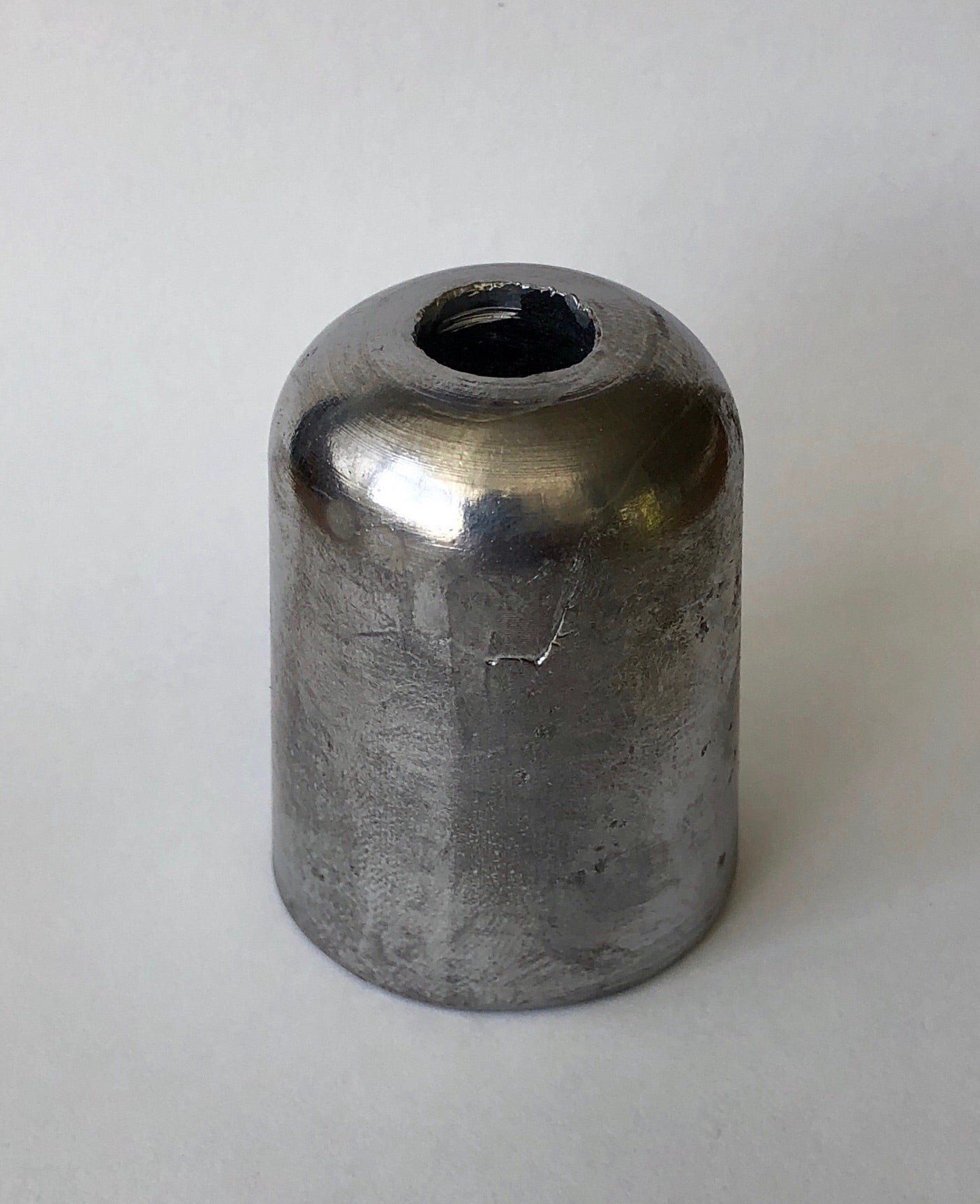
"A thing of beauty"! Our 0.46kg add on sash weight. The domed top is what stops it catching inside the box.
15 years ago we invested in our own jig and had our own add on sash weight cast to our own specification, with a distinctive domed top. When two weights are stacked or sitting alongside each other in the same box, the dome means they move past each other cleanly, without catching on one another. That same weight, designed by people who restore sash windows for a living, is now available to you.
It's a small design detail, but it makes a real difference to how the finished job actually performs. No catching, no snagging, no returning to a job six months later because a flat edge finally caught something that it couldn't move past. It's exactly the kind of thing that twenty years in this niche trade gets you: not just the ability to fix the problem in front of you, but the pattern recognition to notice when the tools available for the job simply aren't good enough, and the willingness to go and make a better one.
We'll admit it, we're perfectionists. While we were at it, we noticed something else missing from the market: a truly small weight. Every option available was heavier than plenty of jobs actually called for, which makes fine tuning a balance far harder than it needs to be. So we had a half pound, 0.23kg weight made too, small enough to get a sash balanced to perfection, not just close enough.
You might be wondering why we stop at one pound. Simple: we don't need to go any bigger. Add on weights are designed to stack on top of each other inside the box, so two one pound weights give you a two pound weight, three give you three pounds, and so on. Add a half pound on top and you can land on almost any figure you need. Building up to the right weight this way is far more flexible than trying to guess one big weight that suits every window, and it means you're never stuck with a weight that's slightly too heavy or slightly too light.
★★★★★
"The weights from Lock and Latch were exactly what I needed to complete the repair on my windows. The staff were very helpful and sent me what I needed, arriving within a few days. I want to thank the staff for all of their help and assistance."
★★★★★
"Excellent product! Accurately weighted, the tapered shape helps to avoid colliding with other weights in the window frame. I've already ordered more."
Why Getting the Balance Right Matters
A correctly balanced sash window isn't just about convenience. A window that won't stay open gets propped with whatever's on hand, which is how sash cords fray early and fingers get caught. A window that slams shut under its own weight is a real safety issue, especially in a home with kids or pets. And a window that's fought with every single day tends to get painted shut eventually, just so nobody has to deal with it anymore, which brings its own problems entirely.
Getting the weight right the first time means the window works properly for years, not just for the day the job was finished. If you're figuring out what you need for your own windows, our Sash Weight Calculator takes the guesswork out of it, so you order exactly what your windows need, no more, no less.

A one pound and half pound, stacked happily on top of the original existing weight
Frequently Asked Questions
Why does my sash window slam shut or refuse to stay open?
This almost always means the sash and its weight are out of balance, often because the glass has been replaced with something heavier, or a weight has gone missing over the years. It's rarely a sign the whole window needs replacing.
Do I need to replace the whole weight and cord system?
Usually not. In most cases the fix is adding an extra weight sized to match your sash, not rebuilding the entire system.
What's different about your add on sash weights?
The only weights on the market when we moved to Sydney from the UK had flat tops, but we knew there was a better way, so we designed our own. Ours are cast with a domed top, to our own specification, using our own jig, by people who actually restore sash windows for a living. The dome lets weights sit and move alongside each other inside the box frame without catching on the cord or on one another, which standard flat topped weights can't do.
Why don't you make a weight bigger than one pound?
Because you don't need one. Our weights stack on top of each other, so two one pound weights equal a two pound weight. You simply build them up to the exact weight your sash needs, using the half pound weight to fine tune the balance.
Can I add a weight myself?
It's possible for a confident DIYer, but getting the exact weight right requires knowing the sash's true weight, which changes with glass type and thickness. Getting it wrong can leave the window just as unbalanced as before.
Is a heavy or hard to open sash window dangerous?
It can be. Windows that won't stay open often get propped with makeshift objects, and windows that slam shut under their own weight are a real hazard, especially around kids and pets.
Next up in the series: what actually surprised Matt when he moved from working on sash windows in the UK to working on them in Australia. Got a question you want answered in a future post? Tell us, drop us a line. See you soon.


Leave a comment