Did you know that in Australian summers, up to 87% of the heat entering our homes comes through the windows? In winter, draughty sash windows are one of the biggest sources of heat loss in older homes. If you have double hung sash windows, chances are they rattle, let in cold air, and make your heating and cooling work twice as hard.
The good news is you don't need to replace them. Draught proofing a sash window properly is a genuine DIY job, and the difference in comfort, noise and energy bills is immediate. With proper draught proofing and care, traditional sash windows can even outperform modern replacements.
Many homeowners spend thousands on double or triple glazing, yet never seal the gaps around their windows, which makes that investment far less effective. Draught proofing is one of the most effective and affordable upgrades you can make. (New to the idea? Start with What is Draught Proofing and Why Do I Need It?)
At a Glance
- Time: 3 to 4 hours for your first window, faster after that
- Skill level: intermediate DIY
- Cost: around $115 to $180 in materials per window
- Support: free phone help from our carpenters on 02 7228 0625
"The best time to draught proof your sash windows was ten years ago. The second best time is today."
Benefits of Draught Proofing Your Sash Windows
- Much less heat lost in winter and gained in summer
- Lower energy bills
- No more rattling, and far less outside noise
- Keeps out smoke, dust and insects
- Preserves your heritage windows
- The best return on investment for your home's thermal efficiency
The Right Draught Proofing System for Sash Windows
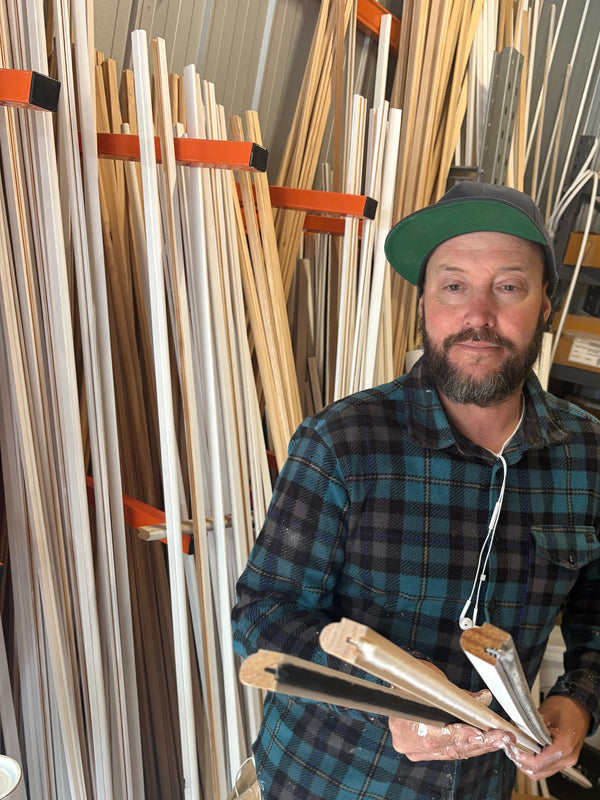
The correct approach for a double hung sash window is replacement timber beading fitted with a brush pile seal, and importantly, one with a central plastic fin. Avoid foam tape and stick-on strips: they break down quickly, look unsightly and simply don't perform.
Our system is a series of brush piles that seal the entire perimeter of the sash window: the top of the top sash, the meeting rails, the bottom rail of the lower sash, the parting bead and the stop (staff) bead. You take off the existing stop and parting beads and replace them with our Draught Seal Stop and Parting Beads, which come with the brush pile already fitted, so there's no fiddly separate installation.
Why brush seals instead of foam?
Double hung sash windows slide, they don't press shut. Foam and rubber seals are designed for casement windows and doors, where the window or door closes against the seal. On a sliding sash, a compression seal wears away every time the window moves. Brush pile bristles flex with the sliding motion instead, and they adapt to uneven gaps, which makes them far more effective on older windows where frames may not be perfectly square. → Compression Seals vs Brush Seals: Myths Debunked
Don't skip the parting bead. This is the strip of timber that separates the two sashes, and it's the part most often overlooked. Leaving it unsealed leaves a gap of around 3mm running the full height of the window, which makes a huge difference to performance. The window needs to be sealed all the way round, parting bead included.
What You'll Need
Materials
- Draught seal stop / staff bead: seals the gap between the sash and the frame on the sides
- Draught seal parting bead: seals the gap running up each side between the two sashes
- Meeting rail carrier with brush pile: seals the meeting rails, where the two sashes meet in the middle
All of the above comes in a handy kit, with enough for one window up to 2 metres high and 1 metre wide:
- DIY Draught Seal Kit for One Double Hung Sash Window (22mm stop bead)
- DIY Draught Seal Kit for One Double Hung Sash Window (30mm stop bead)
Tools
- A knife
- A tape measure
- A hammer and pry bar, to remove the old beading
- A mitre saw or hand saw
- A nail gun, or a hammer and panel pins
- A router with an 8mm straight bit, for the meeting rail
- Sandpaper
Watch How It's Done
Step by Step Instructions
Step 1: Measure up (measure twice, cut once!)
Getting your measurements right is the first step to a successful installation. Before removing anything, note the width of your existing stop bead. The standard sizes are 22mm x 18mm and 30mm x 18mm.
Stop / staff bead:
- Measure the height of the frame and multiply by 2 (left and right sides)
- Measure the width of the frame and multiply by 2 (top and bottom)
- Add them together, allowing at least 100mm extra on each length for mitre cuts
For example, for a window 900mm wide and 1200mm tall: height × 2 = 2400mm + 100mm = 2500mm, and width × 2 = 1800mm + 100mm = 1900mm. Total stop bead needed: about 4.4 metres.
Parting bead:
- Measure from the sill up to the head (top) of the frame
- Multiply by 2, as you need parting bead on both sides
- Add 100mm per length for cutting
For the same 1200mm tall window: 1200mm × 2 = 2400mm + 200mm = about 2.6 metres.
Tip: measure every window separately, because windows in older homes often vary in size, even in the same room. Our free Beading Calculator does the maths for you, or call us on 02 7228 0625 and we'll work it out with you before you order.
Step 2: Remove the old stop bead
The stop bead runs down both sides of the frame and holds the lower sash in place. Run a knife along the edge of the bead to cut through the paint, then lever it off the frame with a flat pry bar or chisel. Keep the old bead as a reference for sizing your replacement.
Top tip: start in the middle and work out towards the ends. The bead is more flexible in the middle, so it's less likely to split.
Step 3: Remove the bottom sash
With the stop bead off, carefully lift the lower sash out of the frame and set it aside. This gives you access to the parting bead.
Step 4: Remove the parting bead
The parting bead sits in a groove in the centre of the frame, separating the upper and lower sashes up the sides and across the top. Run your knife along as much of it as you can to loosen the paint, then lever it out of the groove with a chisel or flat pry bar. Work carefully, as the channel is narrow, and remove it all the way round, including across the top.
Step 5: Remove the top sash
With both sashes out, you have full access to the whole window. This is the ideal time to:
- Check for rot and repair it with a timber epoxy repair system before going any further
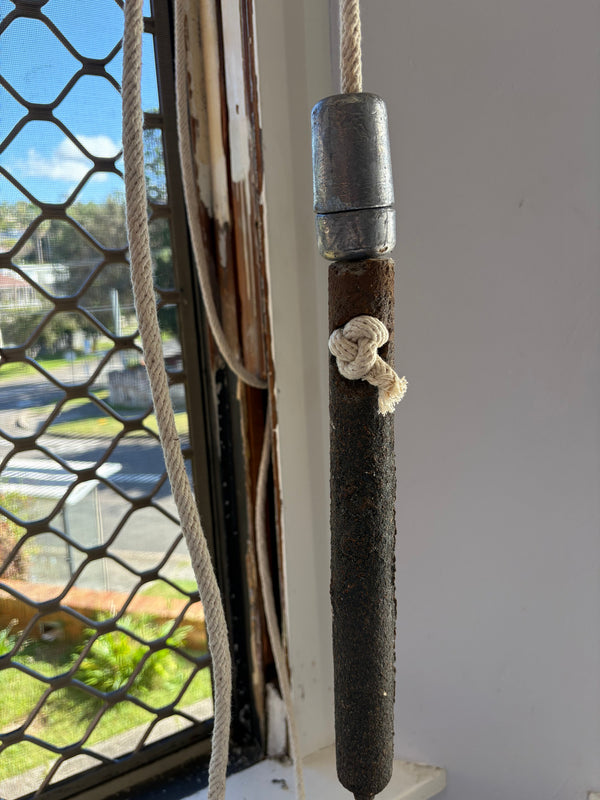
- Weigh your sashes and check the counterweights are right. See our re-balancing guide
- Replace the sash cords, and change the weights if needed
- Replace the pulleys if they're worn
- Scrape back the frame and remove any built-up paint
Step 6: Seal the meeting rail
The meeting rail, where the two sashes meet in the middle, needs sealing too. Our meeting rail carrier is a self-adhesive PVC strip with a brush pile and twin central fin, which forms a continuous barrier against air and water.
- Make sure the surface is clean, dry and free of debris
- Use an 8mm straight router bit to cut a groove 3.5mm deep in the meeting rail of the bottom sash, so the carrier sits flush
- Press the carrier into the groove. It comes in 1 metre lengths, enough for most windows
- Put a small dab of mitre glue or superglue at each end to stop the brush pile moving over time
Step 7: Re-hang the cords and weights
Re-hang your sash cords with the correct weights before going any further. Our re-balancing guide covers how to weigh each sash and hang the top and bottom weights correctly. Not sure how much weight to add? Use our free Sash Weight Calculator.
Step 8: Install the new parting bead
Our draught seal parting bead comes with the brush pile already fitted on one side.
- Start with the top piece across the head. Measure across the frame and add a few millimetres, so the bead runs the full width.
- Pre-drill the bead, then nail it in place. We recommend 40mm nails.
- Put the top sash back in.
- Measure the side pieces from the sill up to the top bead you've just fitted, and cut a piece for each side.
- Mark the halfway point (the meeting rail) in pencil and cut each side piece in half there.
- On the bottom half, fit the bead with the brush facing inwards. On the top half, flip it so the brush faces outwards. The brush always faces the sashes, not the frame, which cushions them and closes the gaps.
- Pre-drill and nail each piece in place.
Top tip: put a small dab of superglue or mitre fix glue at the top and bottom of each parting bead, between the plastic and the brush. It stops the brush moving and seals the ends.
Step 9: Put the bottom sash back in
With the new parting bead in place, put the bottom sash back in. It should slide smoothly. The brush gives a little gentle resistance but shouldn't bind.
Step 10: Install the new stop bead
Cut the draught seal stop bead to length and position it so the brush seal touches the face of the lower sash. Pin it in place with a nail gun or a hammer and panel pins. The sash should still slide freely. If it's too tight, ease the bead back slightly.
Good to know: our stop beads have a plastic fin running through the middle of the brush. It's the fin that forms the seal, so make sure it touches the sash.
Step 11: Test and adjust
Open and close both sashes to check they slide smoothly. There should be gentle resistance from the brushes but no binding or sticking. If a sash is too tight, loosen the stop bead slightly and reposition it. Then, on a cold or windy day, run your hand around the edges of the closed window. You should feel little or no air coming through.
Step 12: Paint and finish
The timber beading comes undercoated but needs finishing coats to match your windows. Lightly sand and fill the nail holes first, and keep paint off the brushes. Painted brush stiffens and stops sealing.
A note on lead safety: older sash windows may have been painted with lead-based paint. Take care when scraping, sanding or disturbing old paint, and read SafeWork NSW's guidance on lead before you start.


Frequently Asked Questions
How long will this take?
Allow around 3 to 4 hours for your first window. Once you've done one, the rest go much faster.
Do I need a tradesperson?
No, it's a DIY job with basic tools, and our qualified carpenters give phone support while you work. If your frames are damaged or you have a lot of windows, a professional installer can do the repairs and installation together. → Find a trusted installer
When should I not draught proof?
If your windows are in very poor condition, with rotten timber, broken cords or badly damaged frames, fix those first. Draught proofing a window in bad shape won't give good results and can make later repairs harder. Need to fix rot first? See our guide to epoxy timber repair.
Will draught proofing make my windows hard to open?
No, quite the opposite. Fitted correctly, the brush seals give gentle resistance but the sashes still slide freely, and brush against wood runs more smoothly than wood against wood.
Will I be able to see the beading once it's installed?
No. With the window closed it's invisible, and with it open you'll only see a neat line of brush. There are no stick-on strips.
Can I draught proof my windows without taking them apart?
Not properly. You need to remove the stop bead and sashes to reach the parting bead. Stick-on products that don't need the window taken apart won't seal it properly and won't last.
Can this beading be used on casement windows or doors?
No, it's made specifically for double hung sash windows. For doors and casements, see our weatherseal range.
How much does it cost?
Materials for one double hung window usually cost between $115 and $180, depending on size. Compared with replacement windows, and with the ongoing energy savings, it's exceptional value.
How long does it last?
Our beading is made from FSC-certified timber with high-quality brush seals. Installed properly, with the timber kept painted and maintained, it lasts for many years.
Can I see the product before I buy?
Yes. Order samples, or visit our warehouse in Warriewood, NSW 2102 by appointment. Contact us to arrange a time.
More questions? See our full Sash Window FAQ.
Ready to get started? We supply everything you need to draught proof your double hung sash windows, plus expert advice by phone or email. Shop the DIY Draught Seal Kits, or call us on 02 7228 0625 or email sales@lockandlatch.com and we'll help you work out what you need.