

Repair guide · Double hung windows
How to re-balance a double hung sash window
If your sash window won't stay open, slams shut or feels heavy to lift, the counterweights inside the box frame are probably out of balance. Here's how to weigh, adjust and re-hang them correctly.

Before you start
How the weight and pulley system works
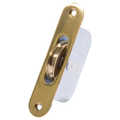
A traditional sash window uses a hidden counterweight system to open and close smoothly. Each sash is connected to a cast iron or lead weight inside the box frame, linked by a cord that runs over a pulley in the frame. When the weights match the sash, it glides up and down and stays where you leave it.
What you'll need
A note on safety: sash weights are made from lead, cast iron or lead alloy. Support the sash securely while it's out of the frame, keep fingers clear of the pulley, and have a second person help lift the sash back into place.
Step by step
Re-balancing your window in six steps
-
01
Remove the sash
Start by removing the stop beads (also called staff beads), the strips of timber that run around the inside of the frame and hold the sash in place. Carefully prise them away, then lift the sash clear so you can get to the box frame behind it.
-
02
Take out the existing weights
The weights sit inside the box frame, behind a removable pocket. Take out the parting bead first, then lift the pocket away to expose the cavity. Untie the cord from the weight, feed it back up over the pulley and lift the old weight out.
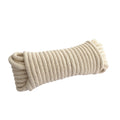
Good time to check your hardware. With everything exposed, look at the pulleys. If they're rusted or seized, now's the time to replace them, along with any frayed or tired sash cord.
-
03
Top sash
Weigh the top sash
Weigh the sash (bathroom scales work). Add 1 lb (approx. 0.46kg) to the total, then divide by 2. That's the weight needed on each side.
Sash weight + 0.46kg ÷ 2 = weight per sideOn the top sash, the weights need to be slightly heavier than the sash itself, so it holds up in the head of the frame and doesn't drop by itself. Make up any difference with add-on weights, which stack on top of each other.
-
04
Bottom sash
Weigh the bottom sash
Weigh the sash and divide the total by 2. That's the weight required on each side.
Sash weight ÷ 2 = weight per sideUnlike the top sash, the weights on the bottom sash need to be exactly equal to the sash. This keeps it down against the sill so it doesn't rise up.
-
05
Run the new cord and hang the weights
Tie a small weight to the end of a length of string and feed it over the pulley and down into the box frame. Use the string to pull your new sash cord through behind it, then attach the counterweight to the end of the cord.
Pull the weight up to the pulley and temporarily fix the cord with a nail just below the pulley, so the weight can't drop back down while you work. Repeat for all four weights: two for the top sash and two for the bottom.
Tip: leave a generous length of cord below the temporary nail, so there's enough slack for the weight to drop the full distance once the sash pulls it taut.
-
06
Re-hang the sash
Replace the pocket and parting bead, then lift the sash back into the frame. This is much easier with two people: one to hold the sash, the other to fix the cord into the side of the sash with galvanised nails.
-
07
Bonus
Draught proof while you're at it
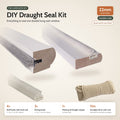
With the window apart, you're most of the way to draught proofing it too. Simply replace the parting bead and stop bead with draught-proofed ones instead of plain timber.
-
08
Bonus
Patch up any rotten timber
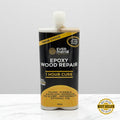
While you're in there, check the timber for soft or rotten patches. Sills and casings are common spots. An epoxy wood repair is a long-lasting fix without replacing the whole section.
Finish the job
Need add-on weights?
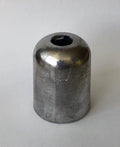
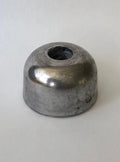
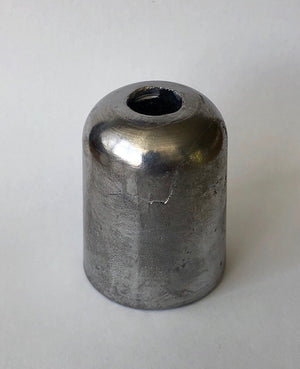
Stackable 0.46kg pounders and 0.23kg halfies, designed by us to sit on top of your existing weights.
Good to know
Common questions
The top sash hangs above its own weights, so the counterweight needs to be slightly heavier than the sash or it will drop under gravity. The bottom sash sits below its weights, so an even balance is all it needs to hold and seal at any height.
Double check your weigh-in and that both sides carry equal weight. If it's still dropping, the sash may need a little more than the standard 0.46kg allowance. Add a 0.23kg weight to each side and test again.
Yes. Old weights are fine to reuse as long as the cord and knots are sound. Add-on weights let you top up the total without sourcing a whole new set.
Work out the shortfall using the sums in steps 3 and 4, then mix and match 0.46kg pounders and 0.23kg halfies. They're designed to stack on top of each other inside the cavity. Our sash weight calculator can do the maths for you.
Of course. Call us on 02 7228 0625 and we'll talk you through it.
A note on lead safety: older sash windows may have been painted with lead-based paint. Take appropriate precautions when sanding or disturbing painted timber, and see SafeWork NSW's guidance on lead work before you begin.